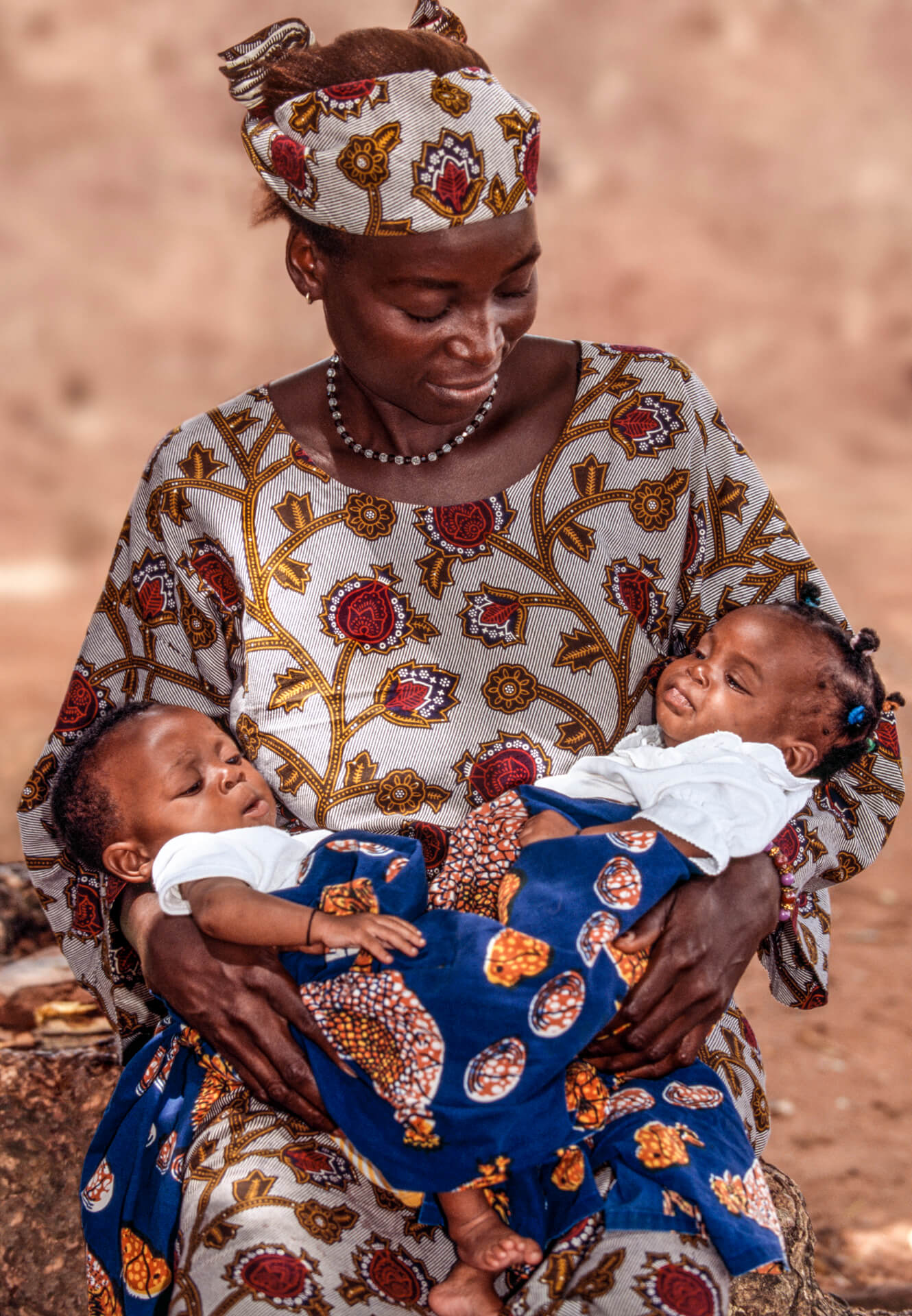
arrival of “He who comes divided”, all twins being
regarded as separate parts of a single being.
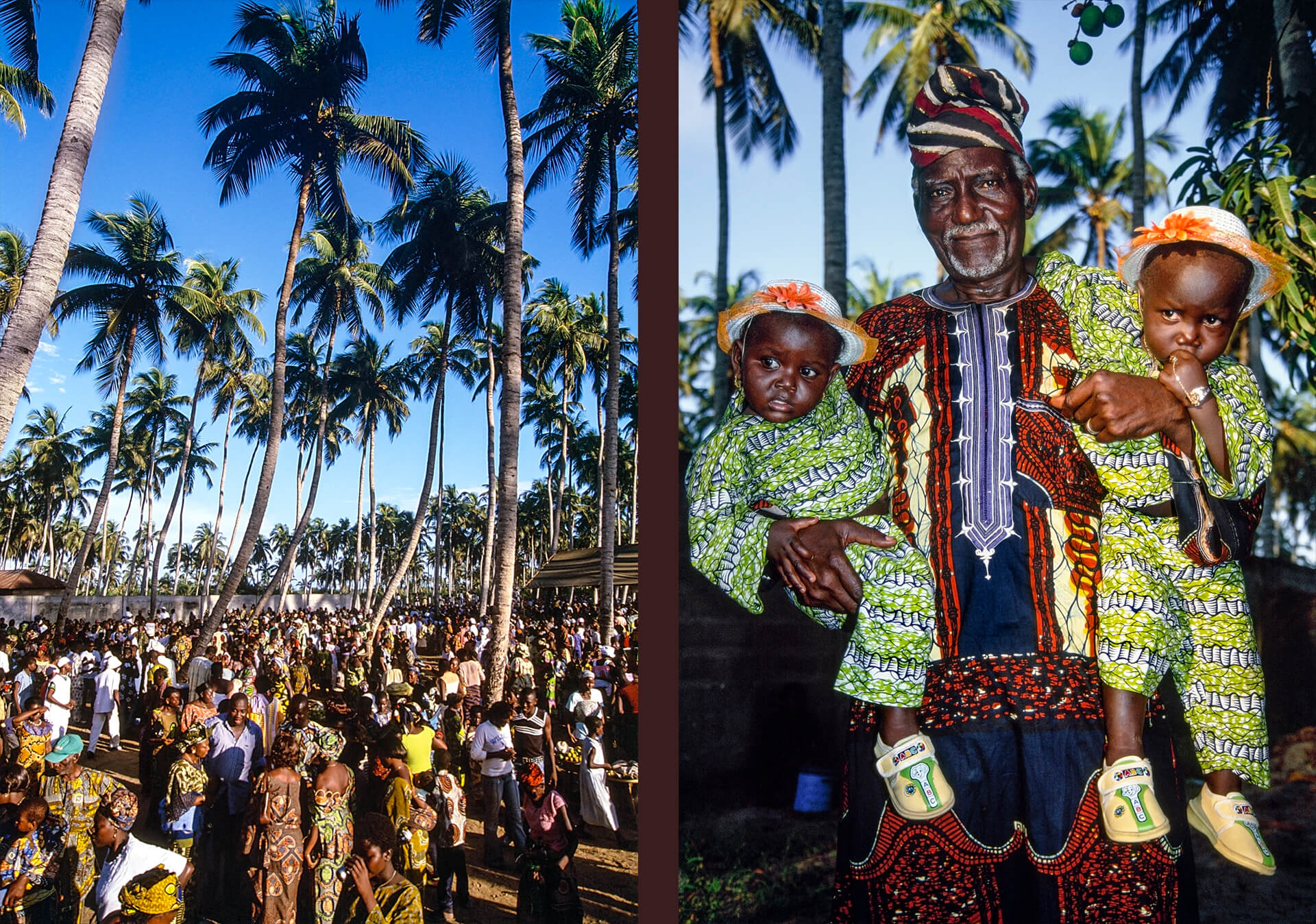
a Fon festival dedicated to celebrating living twins. At
right: A father poses proudly with his twin children;
twins, believed to be of divine origin, are always treated
with respect.
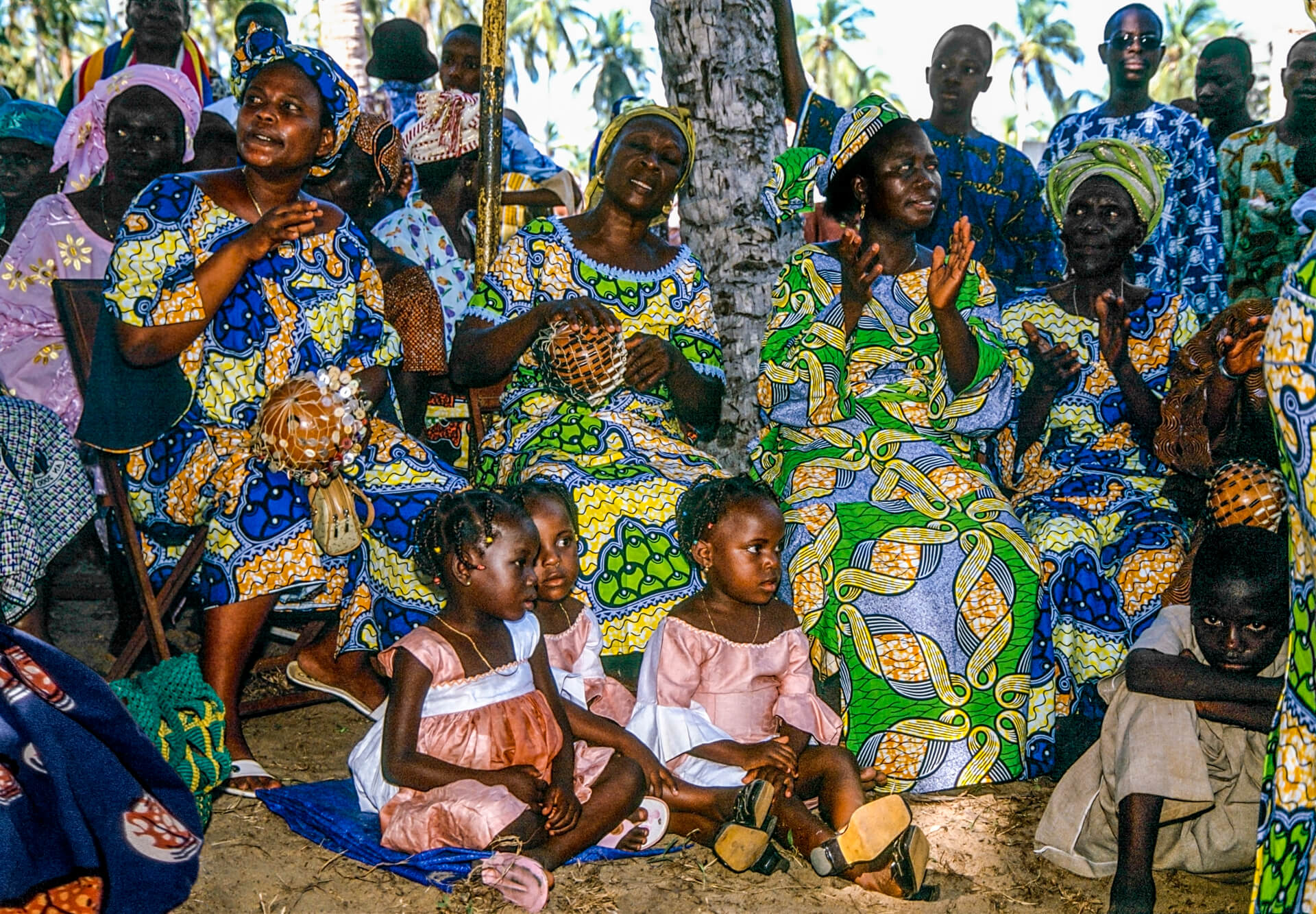
hands.
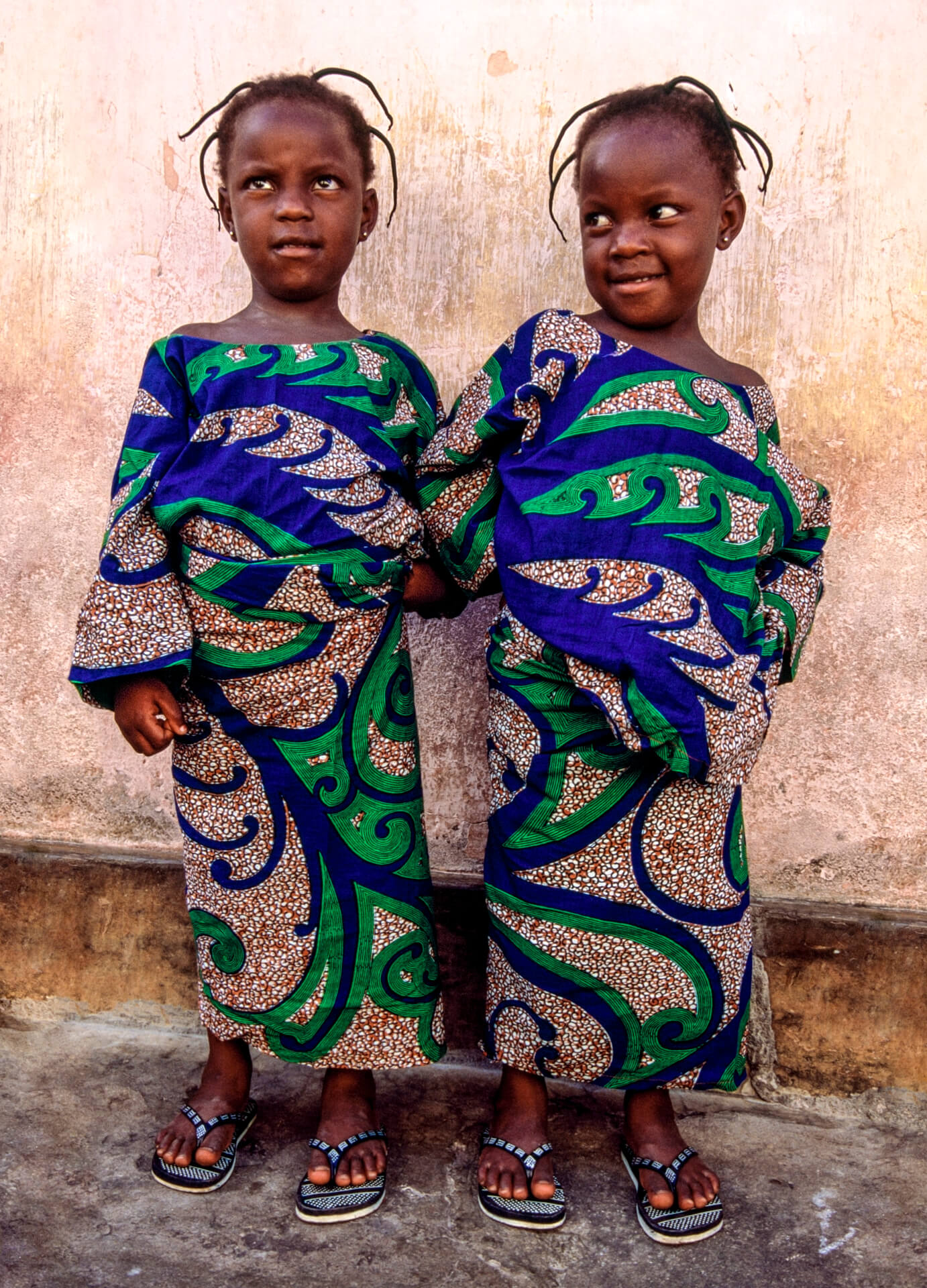
outfits.
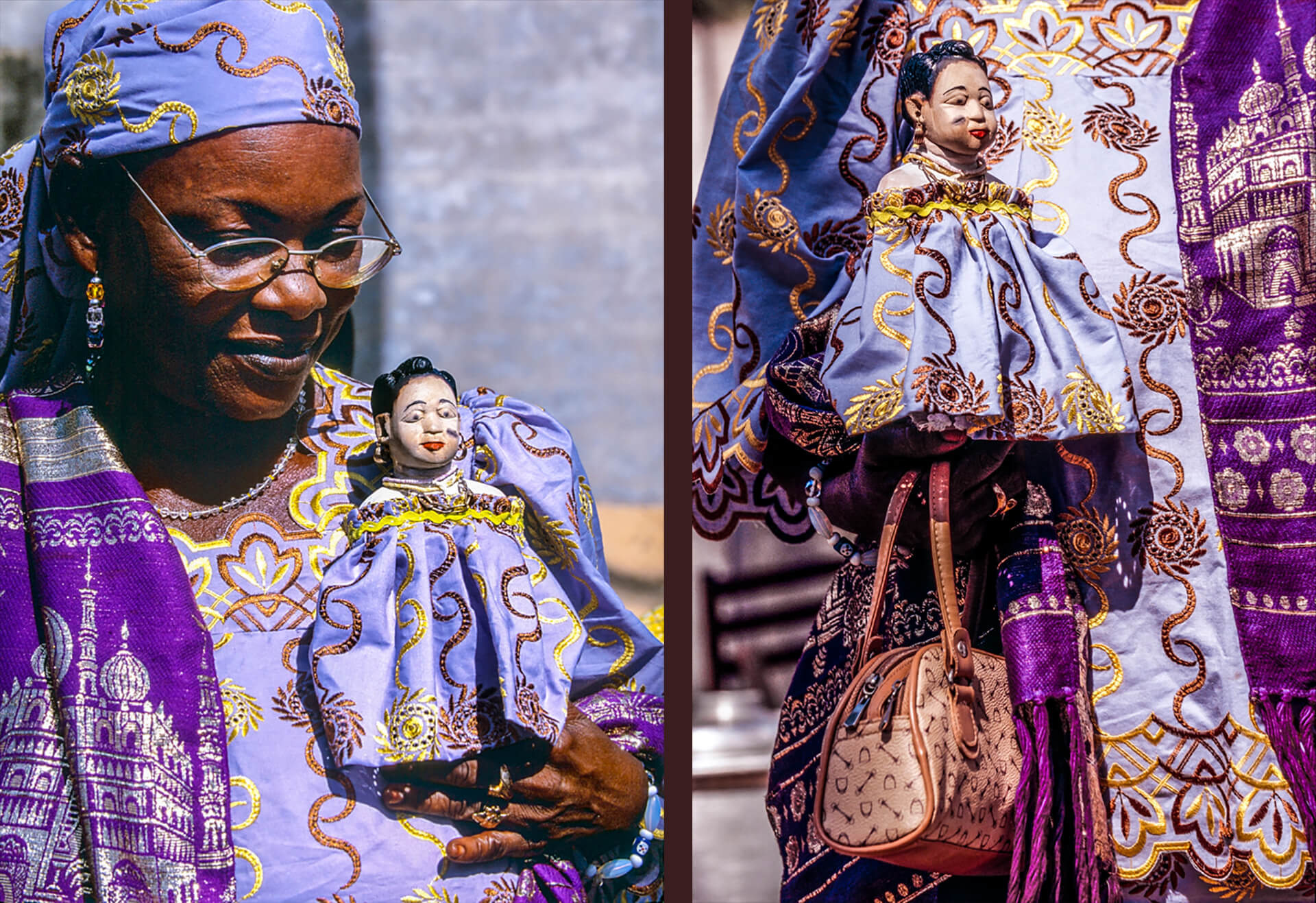
carefully than other children. They are always dressed
alike, and gifts given to them must be in duplicate. If one twin dies, a small wooden image of the deceased must
be carried by the mother and cared for at all times.
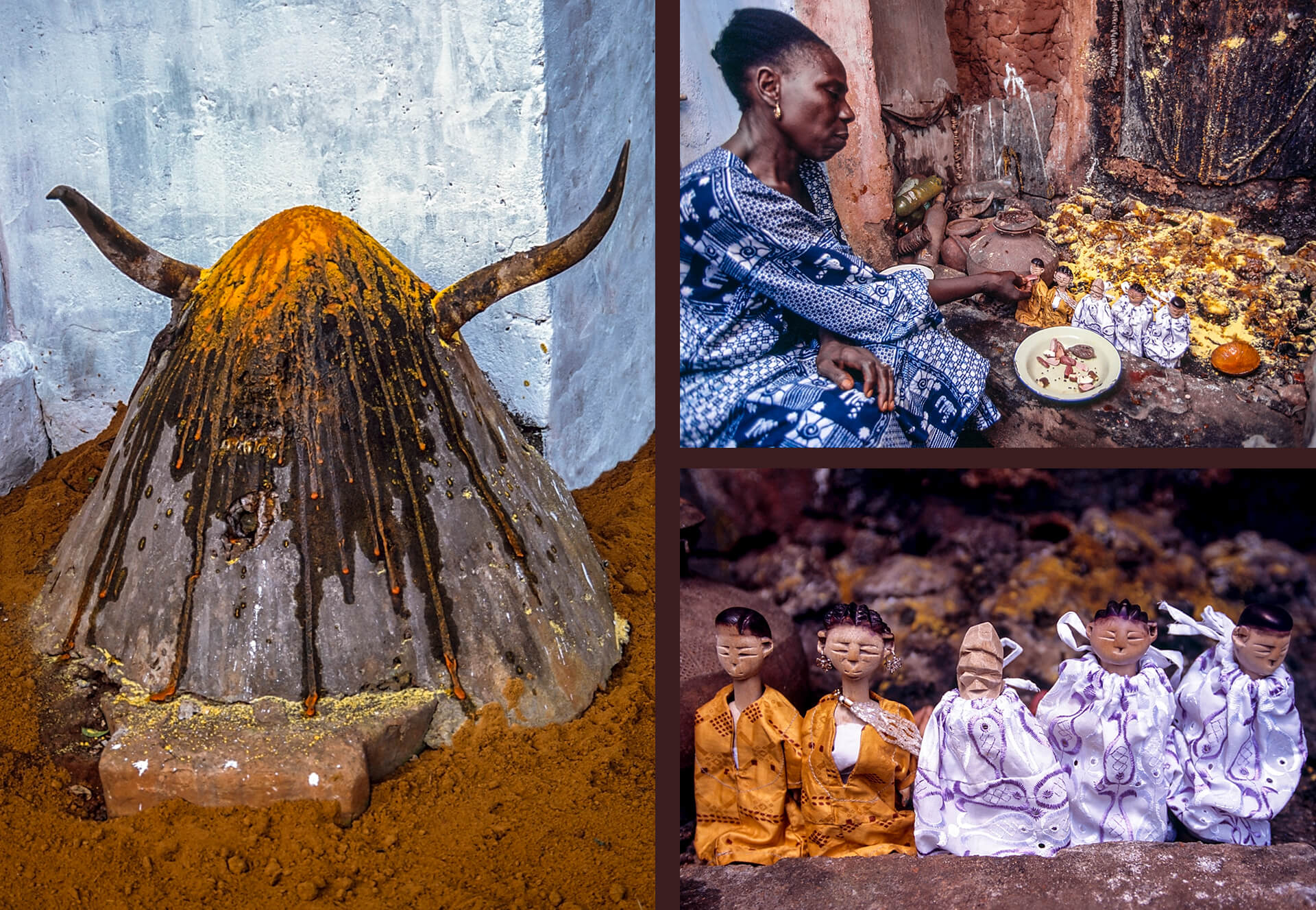
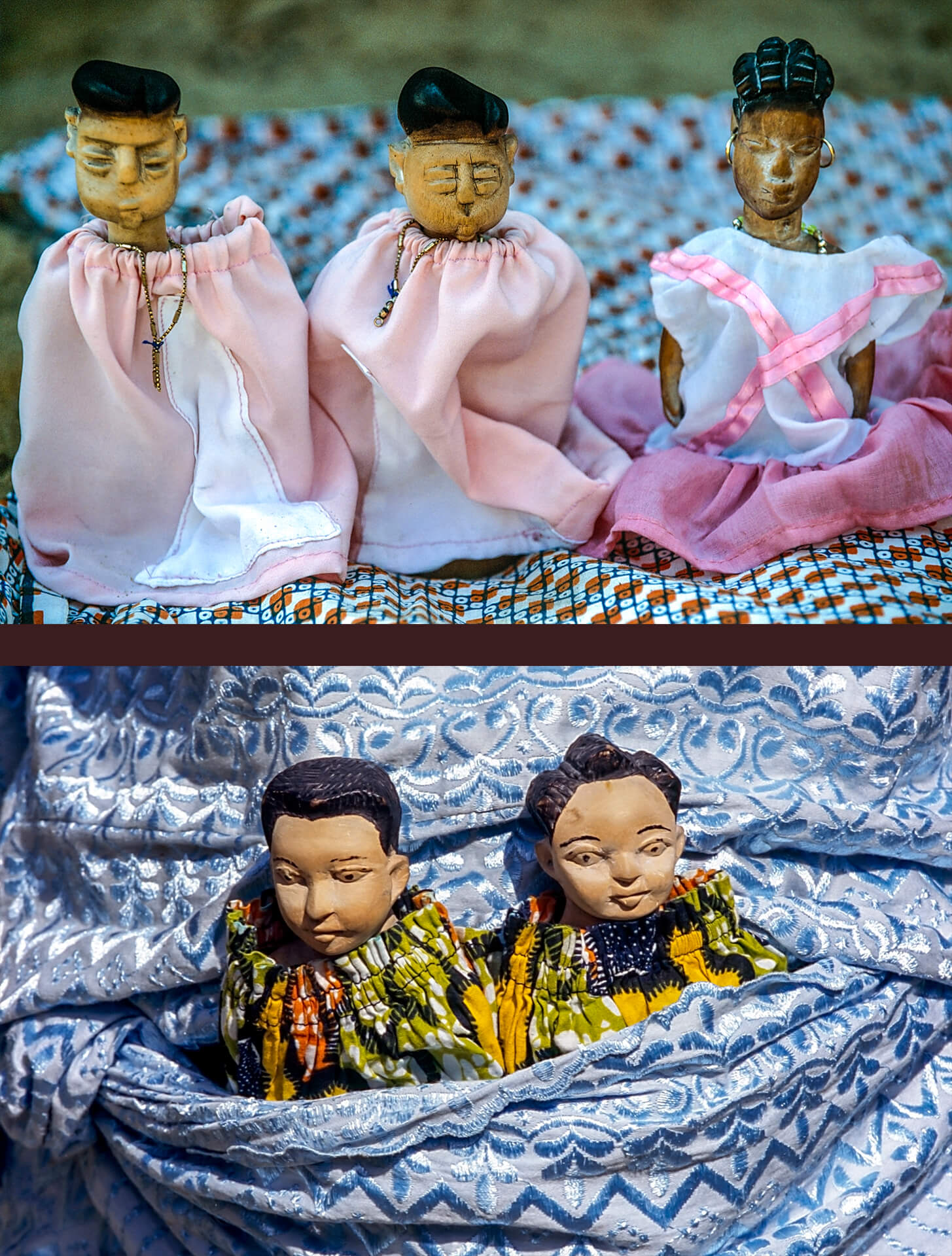
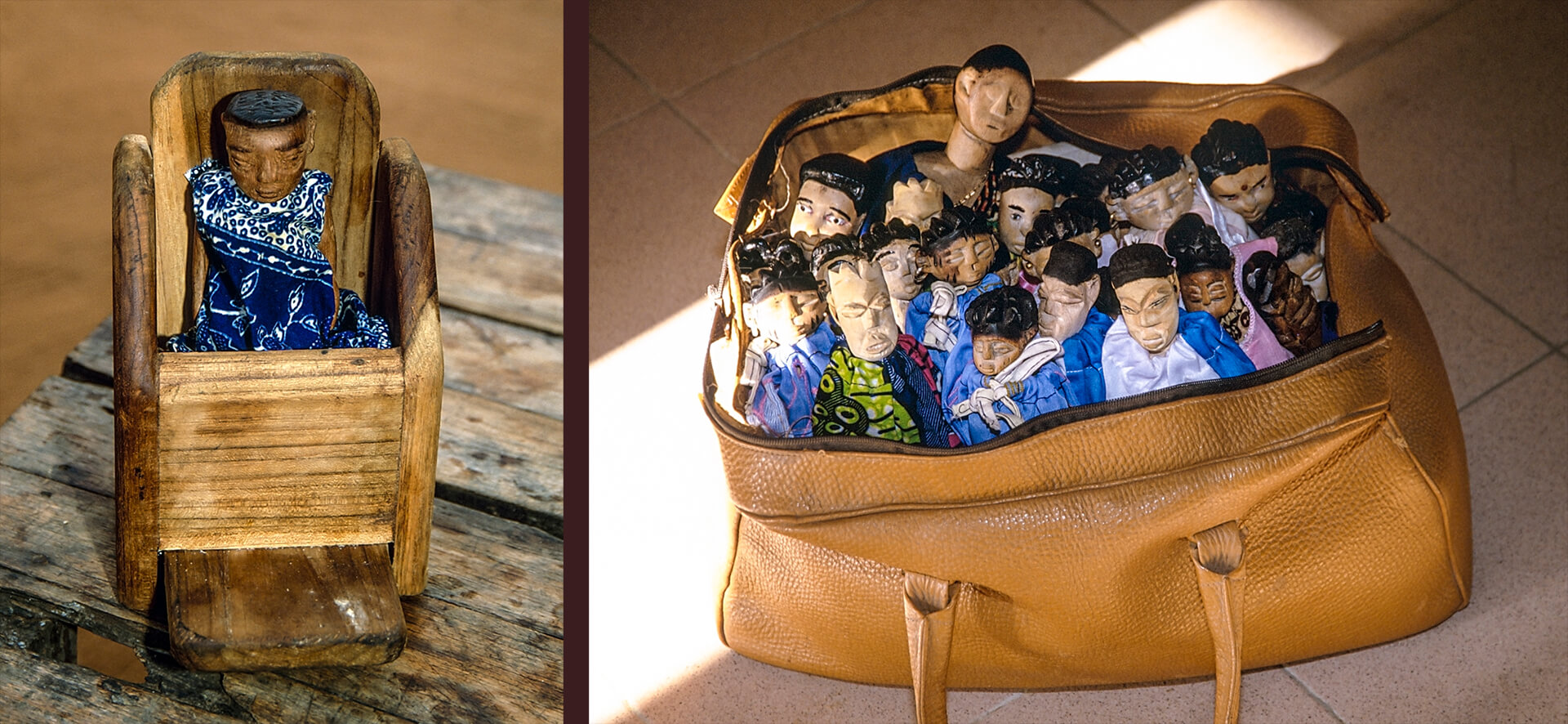
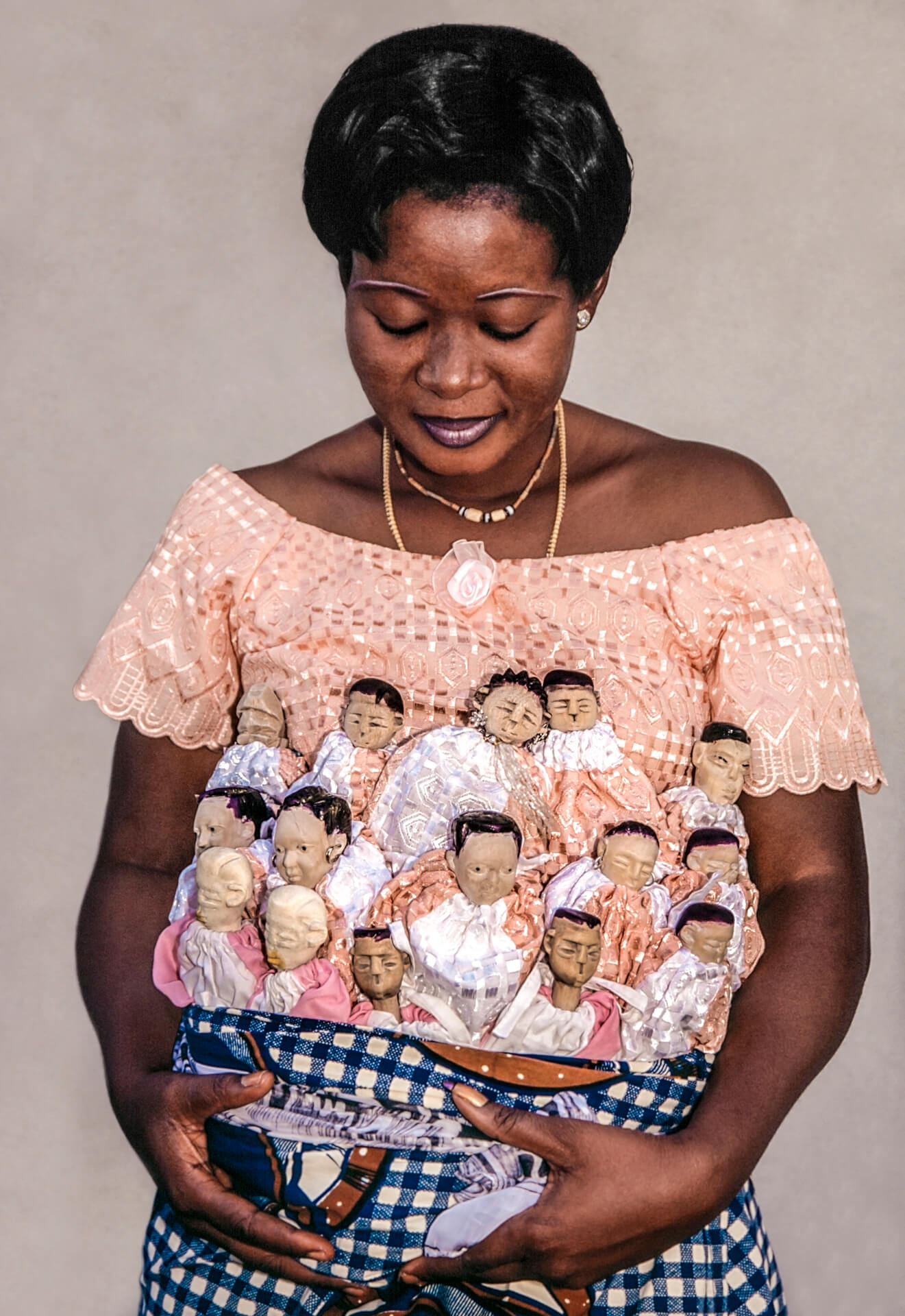
belonging to other mothers along with her own, tucking
them into her waistband for protection.
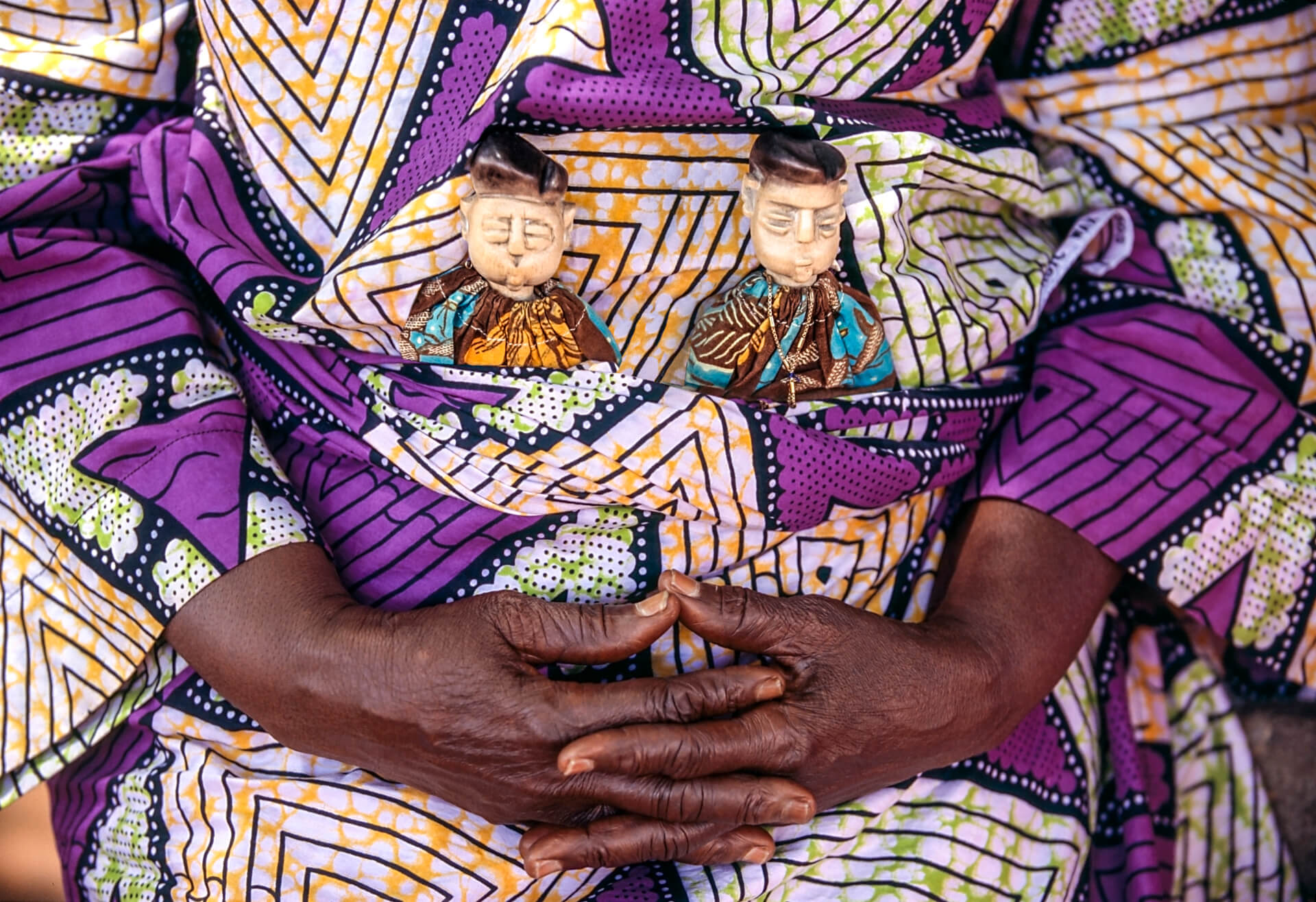
stylish fabric outfits, and, when taken out of the house,
carried tucked in the waistband of the mother.
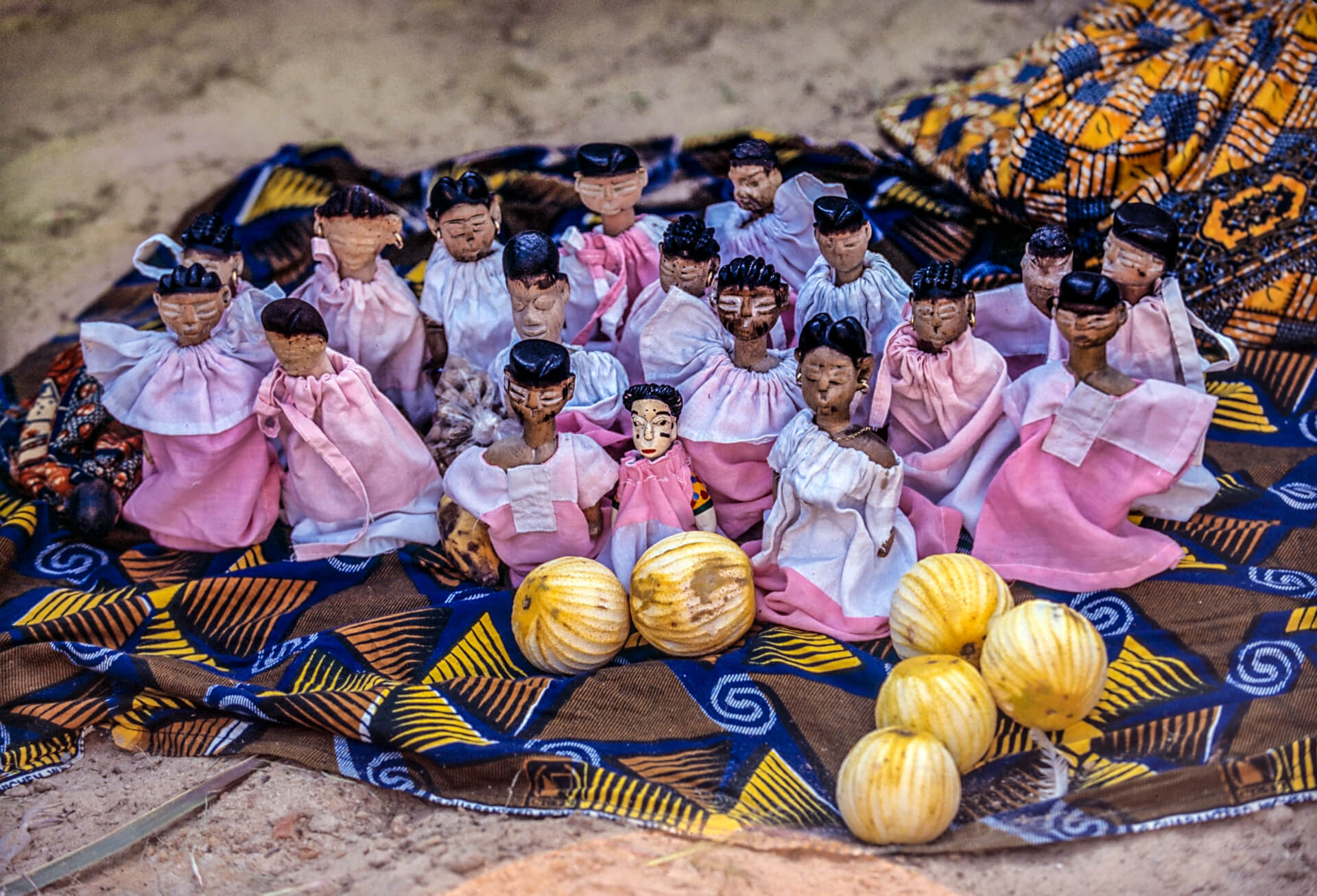
libations are given to the effigies while mothers sang and
danced with them.
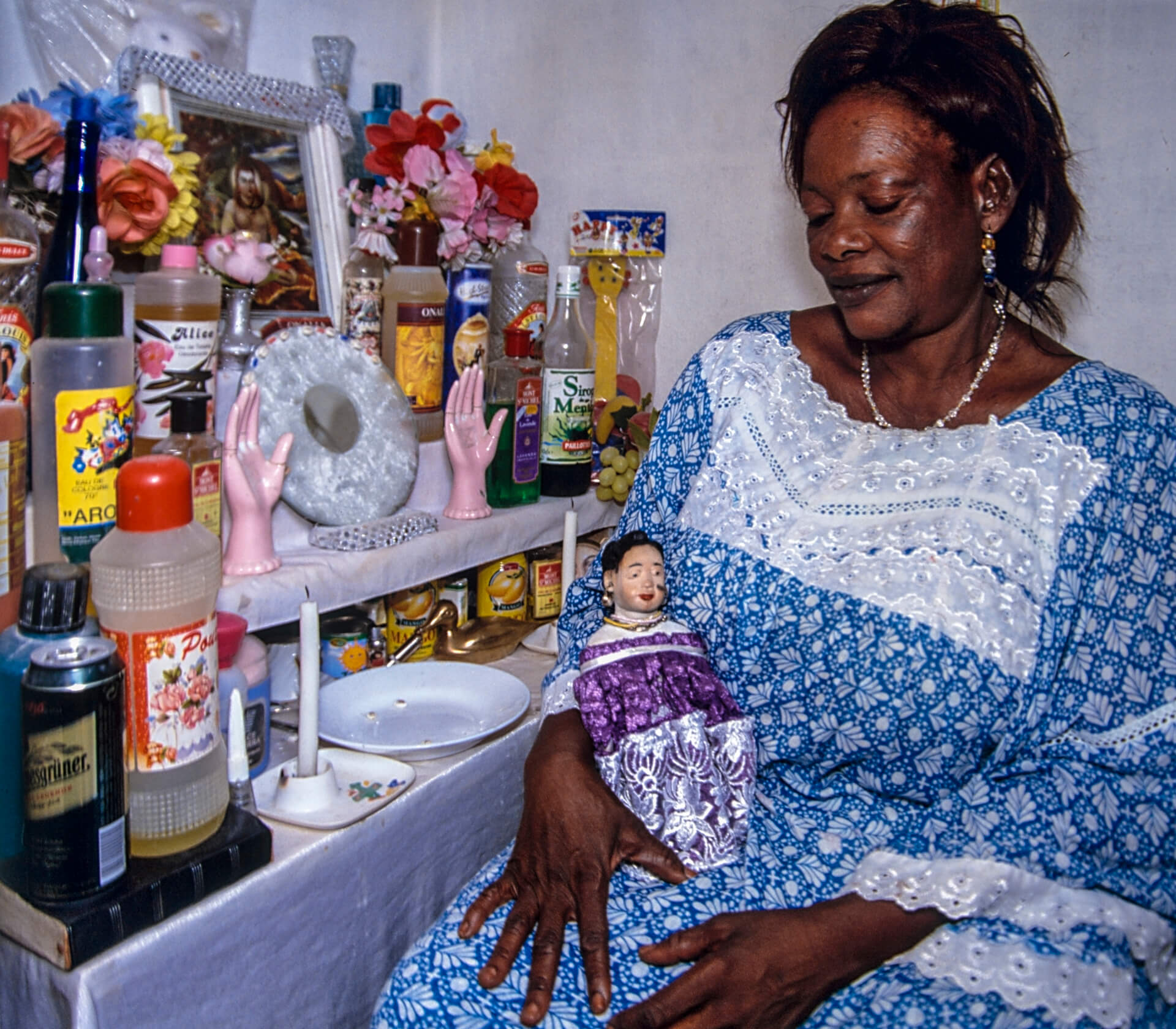
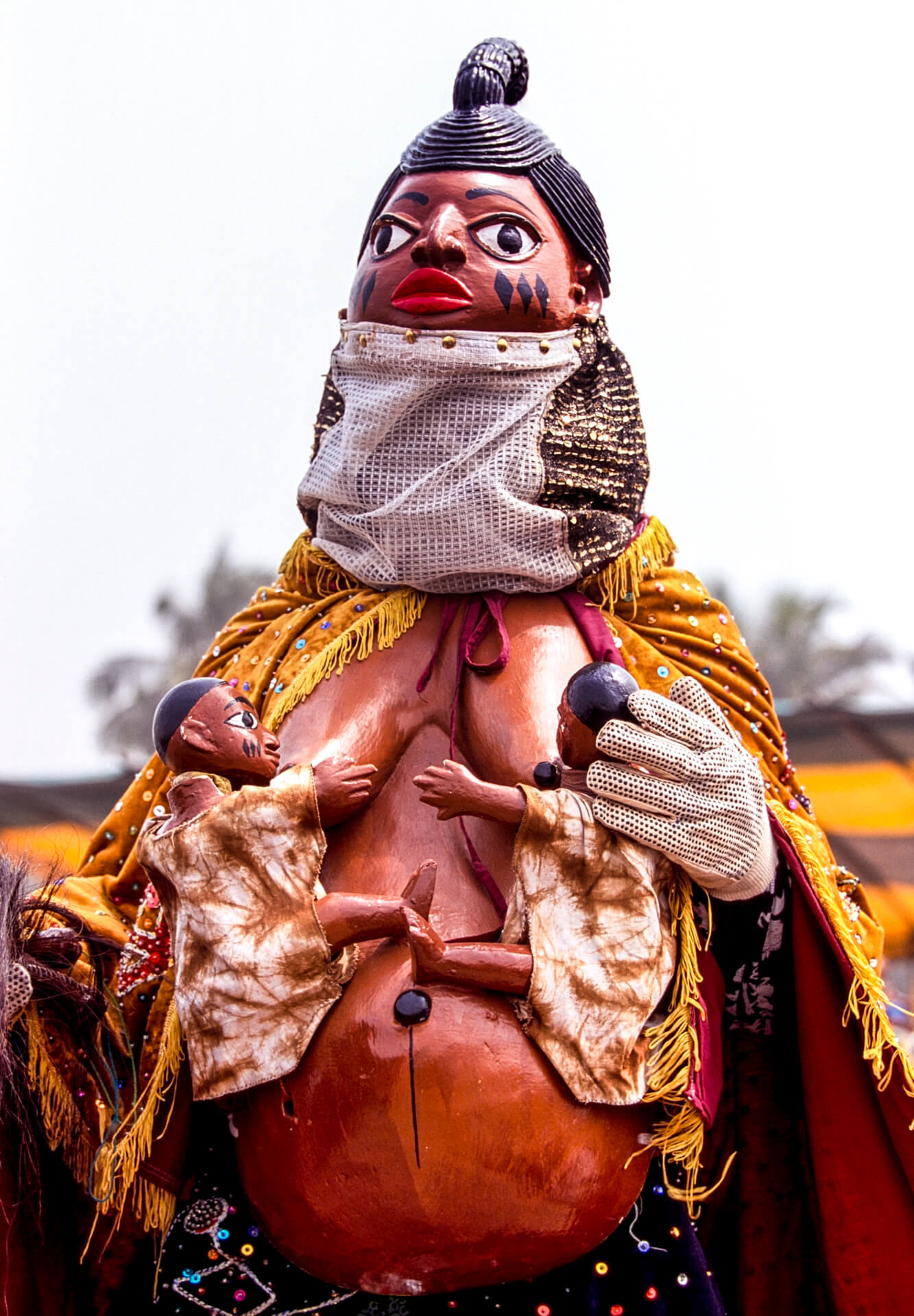
responsible for the beauty, fertility, and well-being of
women, carries a Hovi Dijo twin in her wrap.
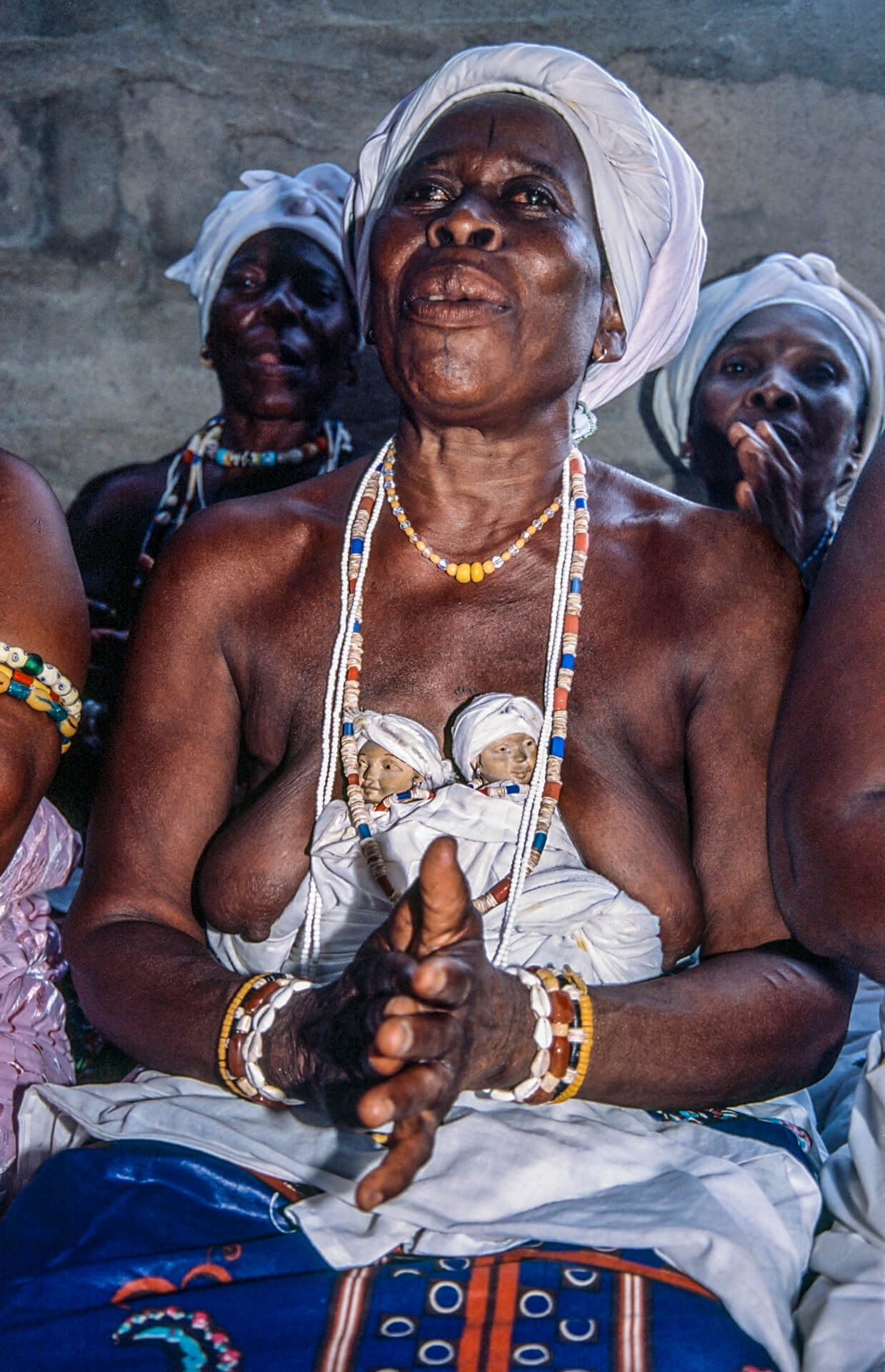
she chants to her deity.
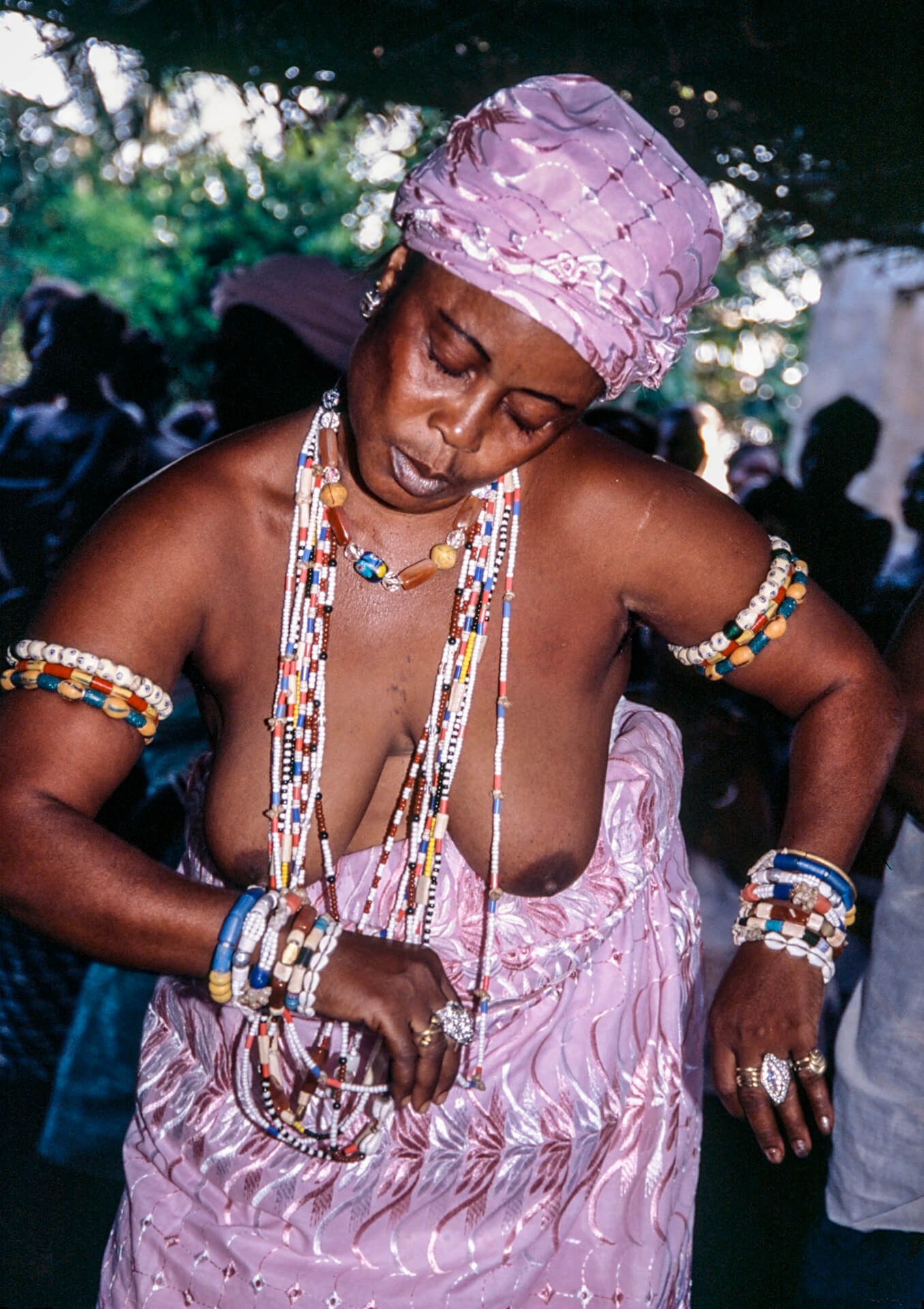
Festival of Twins.
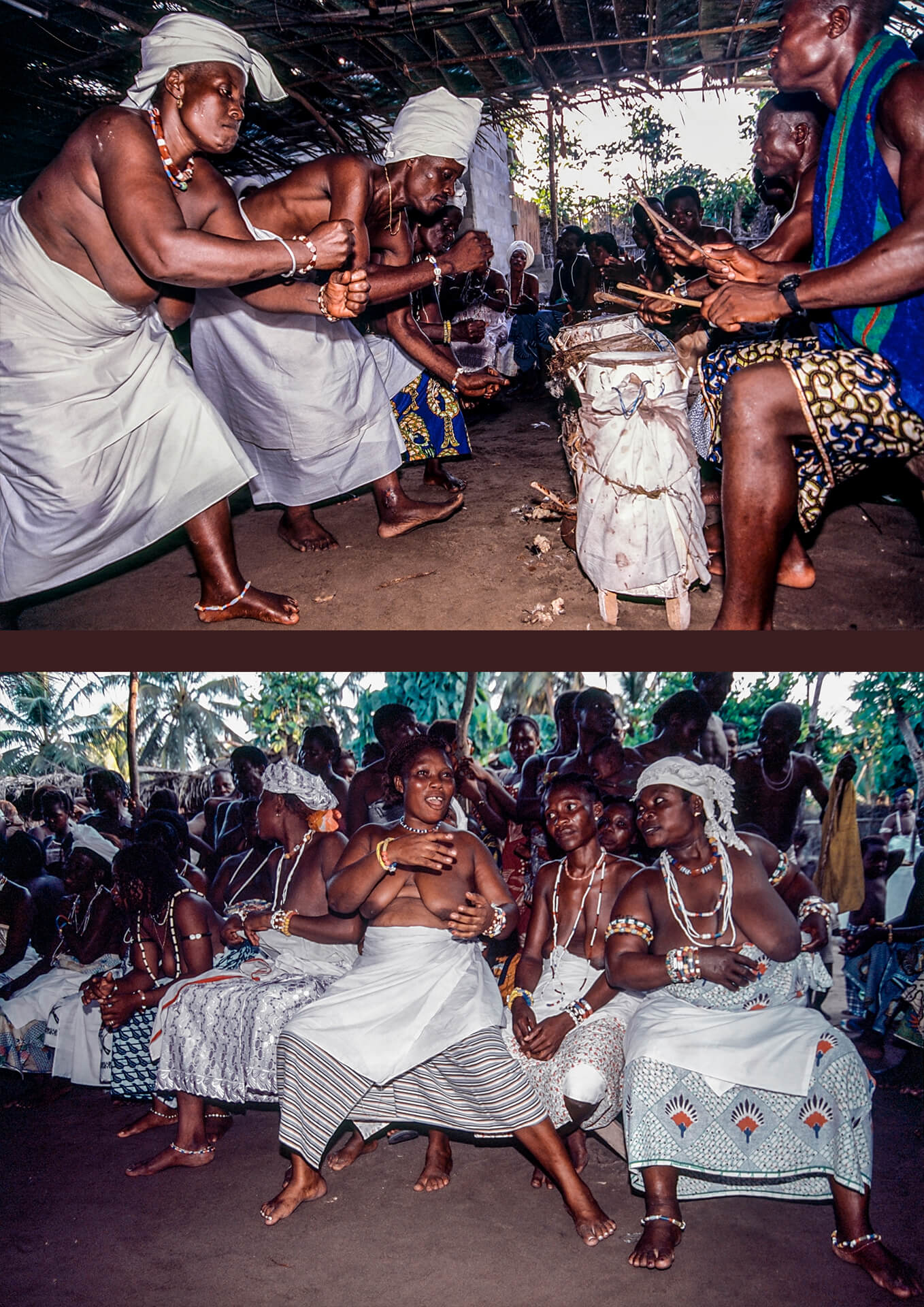
to the beating of a ritual drum. In an altered state they
experience oneness with their deity.
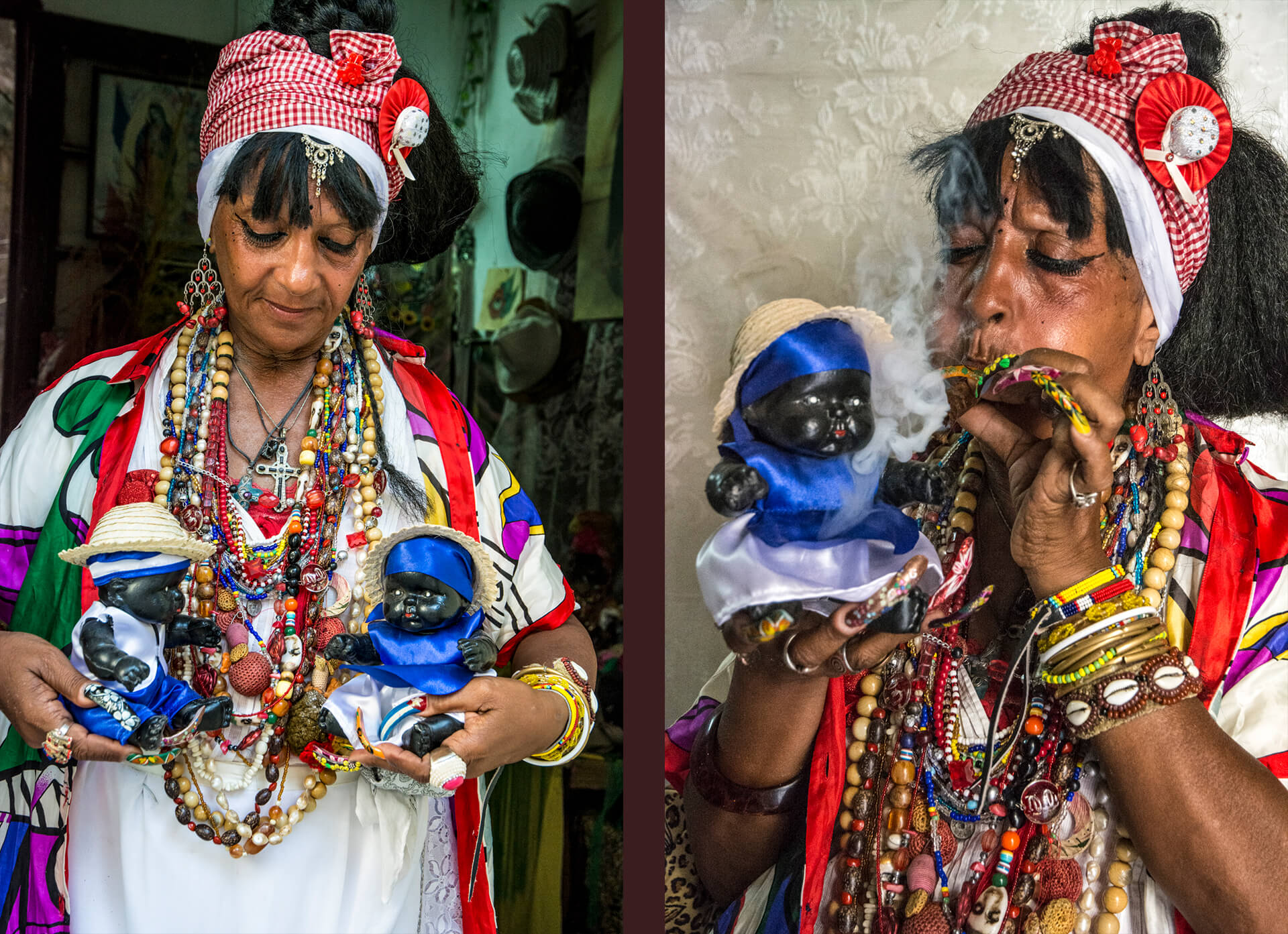
transported to Cuba, where they are known as Santería.
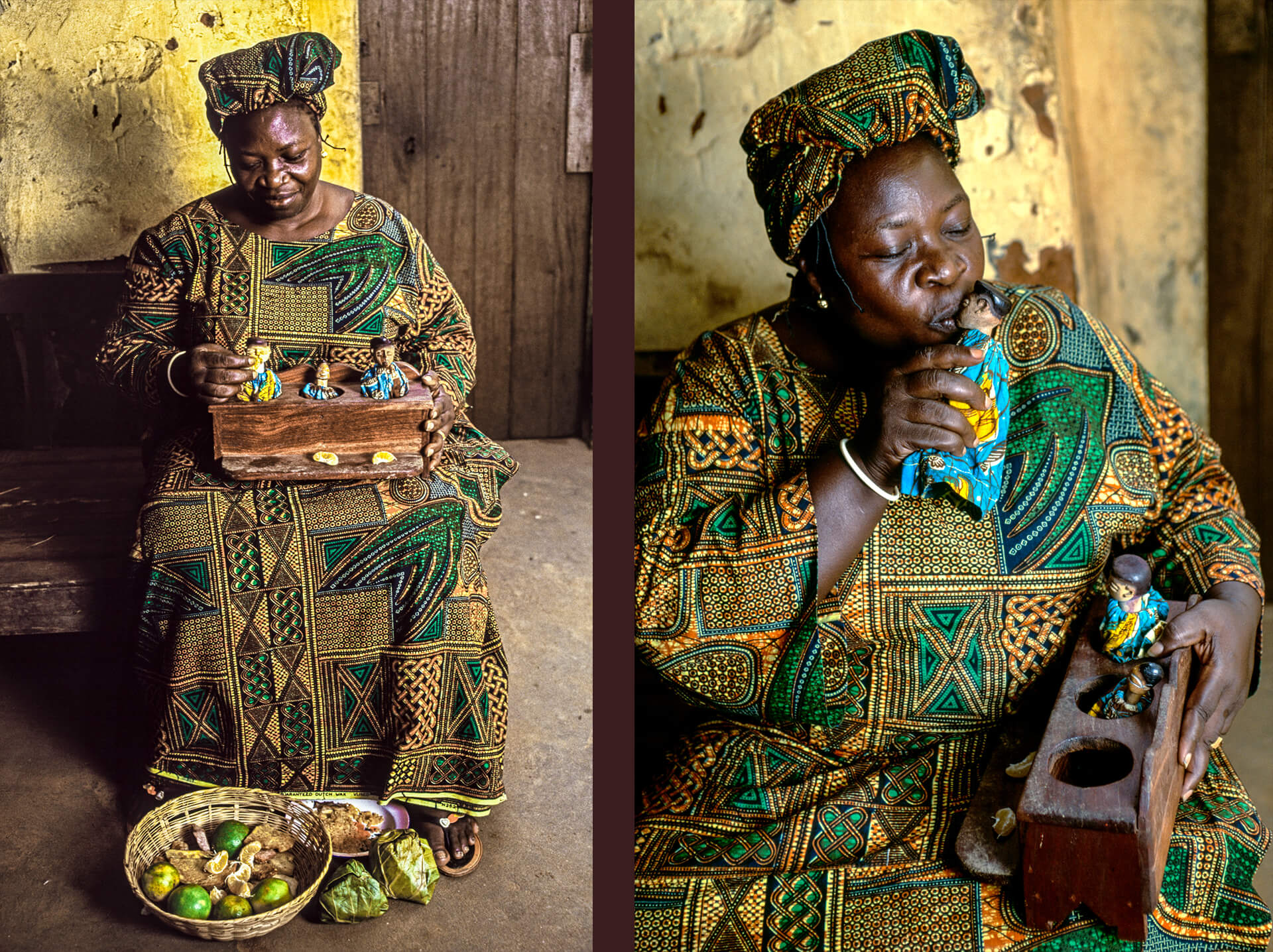
Adelaide, a Cuban priestess living in Havana, blesses her
twin effigies with smoke from a cigar and libations of
Cuban rum.
twins. Yoruba traditions surrounding twins are similar to
the Fon, but their twin effigies are known as Ibeji.
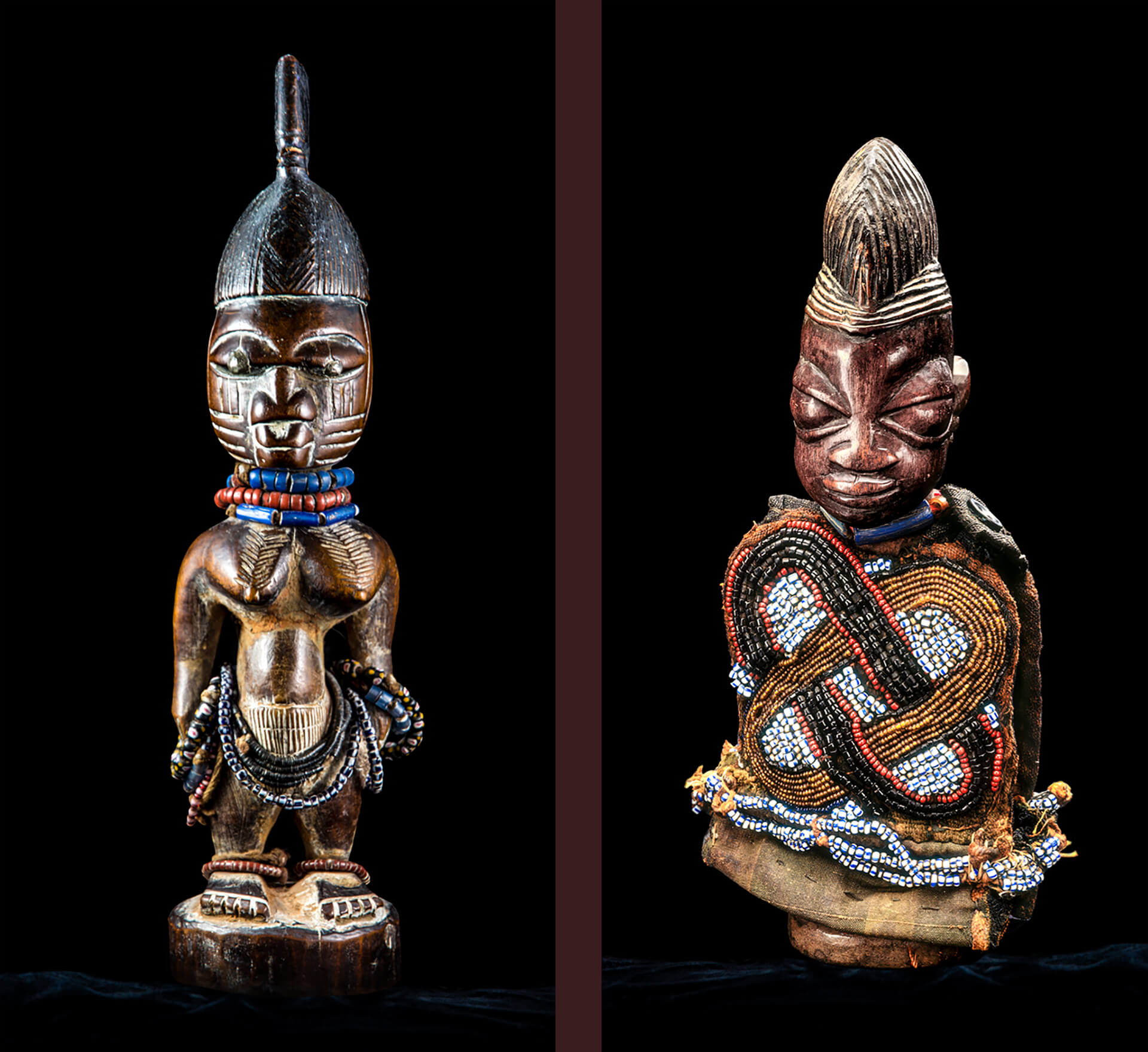
soul. When one twin dies, it disrupts the balance of the
shared soul. To counteract this a small wooden figure,
called Ibeji, is carved as a symbolic substitute for the soul
of the dead twin. If both twins die two of these figures
are carved.
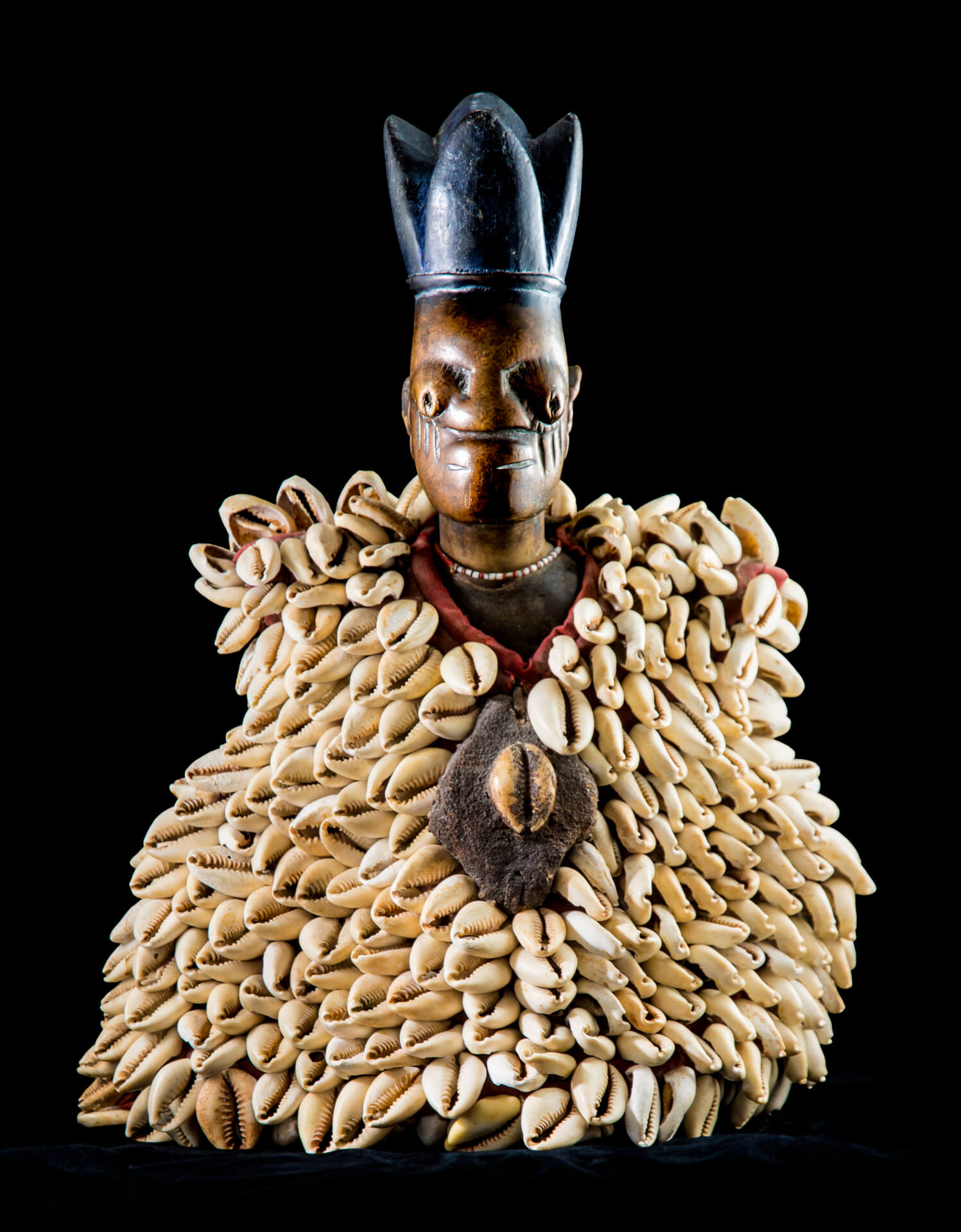
bring happiness to the family. They can also bring
disaster, disease and death, and therefore, must be
treated with great respect.
